

⚠️ RESEARCH PURPOSES ONLY — This compound is not FDA authorized for human consumption. All referenced data is presented for informational and educational purposes only.
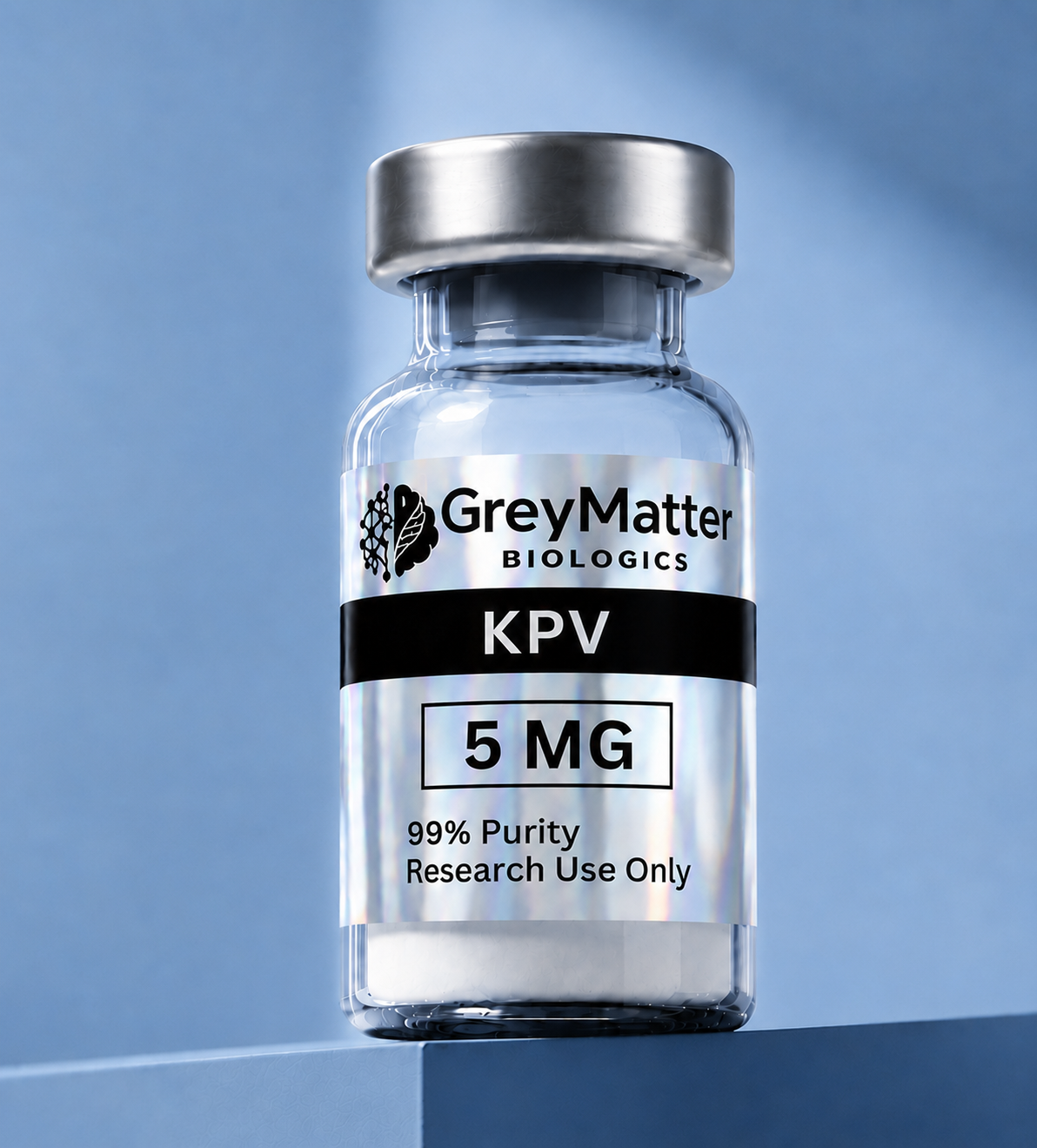
KPV 5MG
$20.00
Availability: 10 in stock
How It Works
An α-MSH-derived tripeptide studied across inflammatory signaling, intestinal inflammation, and wound-healing research models
Inflammatory Pathway Suppression
At nanomolar concentrations, KPV inhibits activation of the NF-κB and MAP-kinase inflammatory signaling pathways. By blunting NF-κB — a master regulator of inflammatory gene expression — KPV reduces secretion of pro-inflammatory cytokines such as TNF-α, IL-6 and IL-1β.
- Inhibits NF-κB and MAP-kinase signaling at nanomolar levels
- Reduces TNF-α, IL-6, IL-1β and other pro-inflammatory cytokines
- Suppresses inflammatory output rather than boosting anti-inflammatory cytokines
Cellular Transport & Action
Research shows KPV is taken up by cells via the PepT1 di/tripeptide transporter, which is expressed on immune cells and intestinal epithelial cells. This transporter-mediated uptake allows KPV to act intracellularly on inflammatory signaling.
- Enters cells through the PepT1 peptide transporter
- PepT1 is expressed on immune and intestinal epithelial cells
- Enables intracellular modulation of inflammatory pathways
Melanocortin Fragment
KPV is the C-terminal tripeptide of alpha-melanocyte-stimulating hormone (α-MSH 11–13). Research indicates most of α-MSH's anti-inflammatory activity can be attributed to this fragment, which also shows antimicrobial activity in published studies.
- C-terminal tripeptide of the melanocortin peptide α-MSH
- Carries much of α-MSH's anti-inflammatory activity
- Antimicrobial effects reported against S. aureus and C. albicans
What Research Has Shown
Key findings from preclinical and in vitro publications
Research Applications
Primary areas of investigation
Intestinal Inflammation & Colitis
A landmark study showed PepT1-mediated uptake of KPV significantly reduced intestinal inflammation in DSS- and TNBS-induced models of colitis.
Dalmasso et al. 2008 ↗α-MSH Anti-Inflammatory Signaling
KPV is studied as the C-terminal tripeptide that carries much of α-MSH's anti-inflammatory and immunomodulating activity.
Brzoska et al. ↗Epithelial Wound Healing
In a rabbit corneal model, topical KPV produced complete re-epithelialization by 60 hours, with a mechanism that may involve nitric-oxide signaling.
Bonfiglio et al. 2006 ↗Antimicrobial Activity
KPV shows antimicrobial effects against Staphylococcus aureus and Candida albicans across a broad concentration range in published research.
Cutuli et al. 2000 ↗Compound Information
Technical specifications