

⚠️ RESEARCH PURPOSES ONLY — This compound is not FDA authorized for human consumption. All referenced data is presented for informational and educational purposes only.
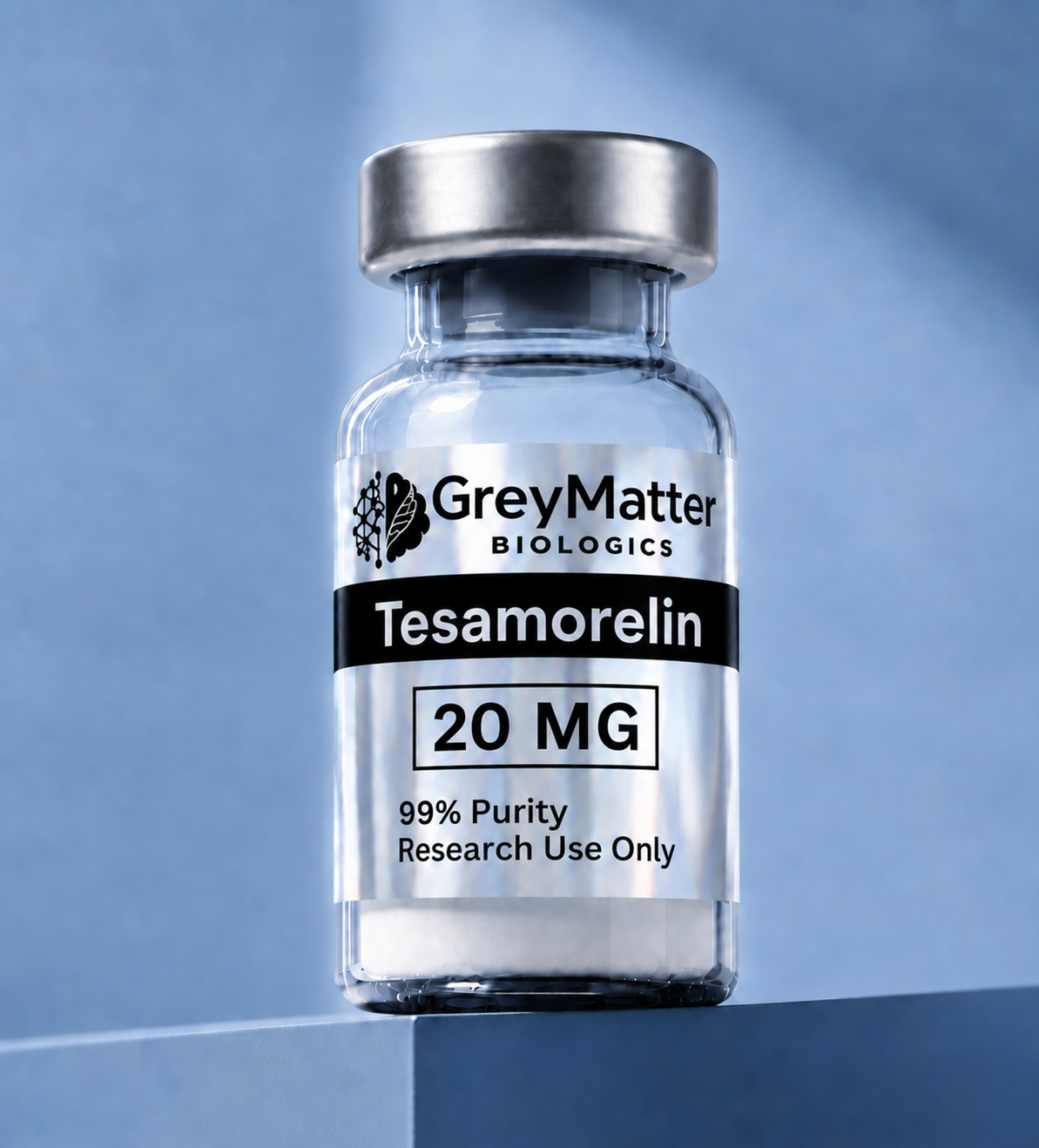
Tesamorelin 20MG
$100.00
Availability: 8 in stock
How It Works
GHRH receptor signaling studied across metabolic, body composition, and cognitive research models
Growth Hormone Secretagogue
Tesamorelin is a synthetic trans-3-hexenoic acid-modified analog of human GHRH(1-44). It binds and activates pituitary GHRH receptors, stimulating endogenous growth hormone (GH) secretion while preserving normal pulsatile GH release patterns — unlike exogenous GH administration.
- Selective GHRH receptor agonism
- Preserves pulsatile GH secretion physiology
- Stimulates downstream IGF-1 production
Visceral Adipose Reduction
Clinical evidence demonstrates tesamorelin reduces visceral adipose tissue (VAT) through GH-mediated lipolytic pathways. GH activates hormone-sensitive lipase in adipocytes, promoting free fatty acid release from visceral fat depots. This mechanism underlies its FDA-approved indication for HIV-related lipodystrophy.
- Stimulates GH-dependent hormone-sensitive lipase activity
- Selectively targets visceral (not subcutaneous) fat
- Preserves lean body mass in research models
Cognitive & Brain Research
Emerging research explores tesamorelin's effects on brain structure and function via IGF-1 signaling. Studies in older adults with mild cognitive impairment report changes in regional gray matter volume and functional connectivity. GH/IGF-1 axis modulation is hypothesized to support neuroplasticity mechanisms.
- Increases circulating IGF-1, which crosses the blood-brain barrier
- Associated with changes in cortical gray matter volume
- Under investigation for cognitive aging research models
What Research Has Shown
Key findings from Phase III trials and preclinical publications
Research Applications
Primary areas of investigation
Visceral Fat & Body Composition
Phase III trials confirmed significant reductions in visceral adipose tissue in HIV+ adults with abdominal fat accumulation. Mechanism involves GH-driven lipolysis in the visceral depots without disproportionate effects on subcutaneous fat.
Falutz et al. 2010 ↗Brain Structure & Function
Randomized controlled trials in older adults with mild cognitive impairment report tesamorelin's effects on regional brain volume and cognitive performance, mediated through elevated IGF-1 signaling.
Baker et al. 2019 ↗GH/IGF-1 Axis
Research model for studying GHRH receptor pharmacology, GH secretagogue effects, and downstream IGF-1 modulation in the context of GH deficiency states and aging-related GH decline.
Stanley et al. 2011 ↗Lipid & Cardiovascular Markers
Studies report tesamorelin's effects on triglycerides, non-HDL cholesterol, and carotid intima-media thickness in HIV-positive adults, supporting research into GH-axis modulation of cardiovascular risk markers.
Falutz et al. 2016 ↗Compound Information
Technical specifications