

⚠️ RESEARCH PURPOSES ONLY — This compound is not FDA authorized for human consumption. All referenced data is presented for informational and educational purposes only.
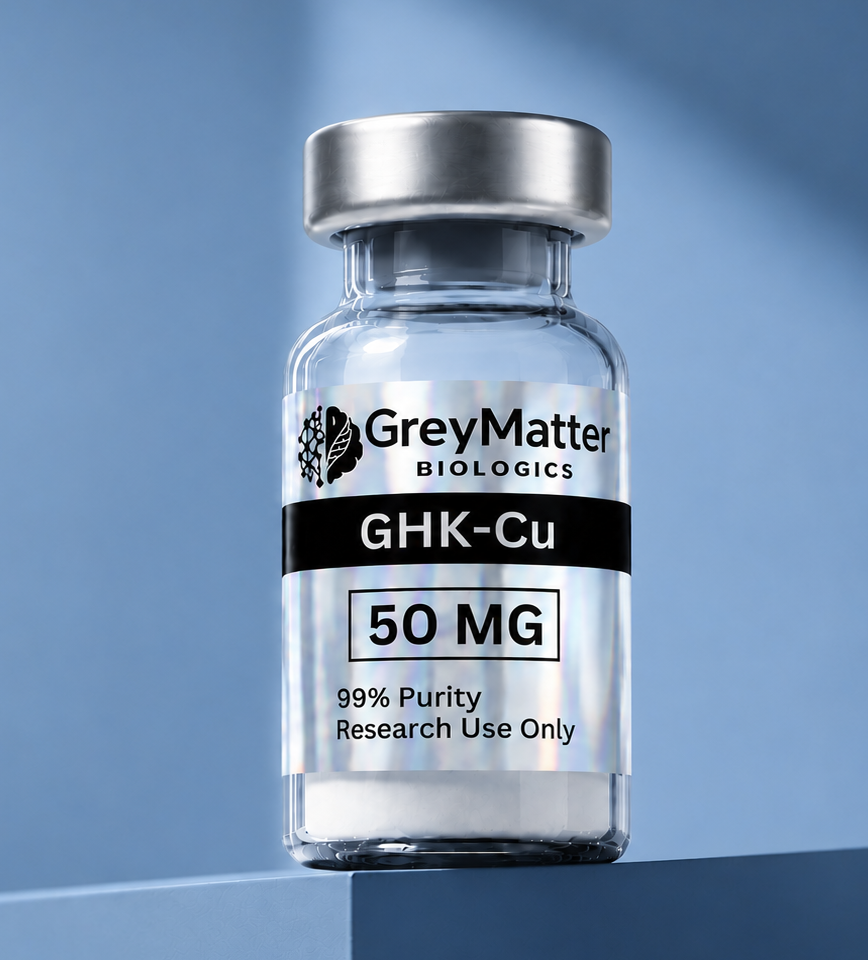
GHK-Cu 50MG
$30.00
Availability: 8 in stock
How It Works
A naturally occurring copper-binding tripeptide with broad regenerative properties
Copper Transport & Signaling
GHK-Cu chelates copper(II) ions and delivers them to cells, activating copper-dependent enzymes essential for collagen crosslinking, antioxidant defense, and tissue remodeling.
- High-affinity copper(II) binding
- Activates lysyl oxidase for collagen crosslinking
- Supports superoxide dismutase activity
ECM Remodeling & Repair
Stimulates fibroblasts to produce type I and III collagen, glycosaminoglycans, and decorin — rebuilding the extracellular matrix architecture in damaged tissue.
- 70% increase in collagen synthesis vs controls
- Glycosaminoglycan production enhanced
- Decorin synthesis for matrix organization
Genomic Reprogramming
Gene expression studies show GHK-Cu modulates 4,000+ human genes, resetting expression patterns toward a healthier, more youthful state. This is among the broadest gene-modulatory effects of any known peptide.
- 4,000+ genes modulated toward health
- Upregulates DNA repair genes
- Suppresses inflammatory gene expression
What Research Has Shown
Key preclinical findings from published studies
Research Applications
Primary areas of investigation
Skin Regeneration
Stimulates collagen, elastin, and glycosaminoglycan synthesis. Studied extensively in wound healing and anti-aging skin models.
Pickart et al. 2015 ↗Hair Restoration
Increases hair follicle size, stimulates follicle growth, and supports hair cycle transition in preclinical models.
Pickart et al. 2012 ↗Gene Expression
Modulates 4,000+ genes including DNA repair, antioxidant defense, and anti-inflammatory pathways toward healthier expression patterns.
Pickart & Margolina 2014 ↗Antioxidant Defense
Chelates free copper, reduces oxidative damage, and upregulates superoxide dismutase — the body's primary antioxidant enzyme.
Maquart et al. 2014 ↗Compound Information
Technical specifications