

 Third-party tested
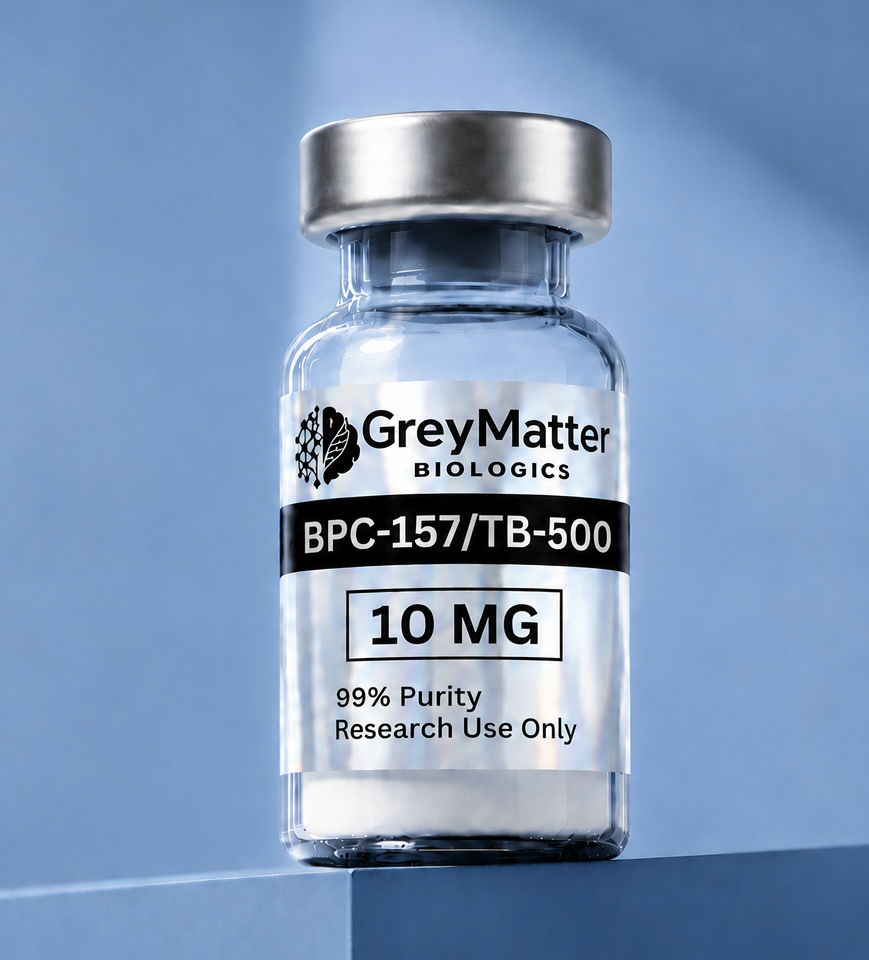
BPC-157/TB-500 (Wolverine)
A synergistic peptide combination designed to support tissue repair and regenerative processes through complementary cellular mechanisms in animal research models.
BPC-157/TB-500 (Wolverine), by the numbers.
Structural and laboratory facts that define this compound. For laboratory research use only.
BPC-157 + TB-500
Synthetic pentadecapeptide
Thymosin β4 sequence
10 mg = 5 + 5 · 20 mg = 10 + 10
How it is studied.
Dual-peptide blend targeting complementary tissue repair pathways
BPC-157 upregulates VEGF expression and promotes new blood vessel formation, delivering nutrients and oxygen to damaged tissue. It also activates the NO system and demonstrates broad cytoprotective properties.
- VEGF-mediated angiogenesis
- Nitric oxide system modulation
- Gastric and tissue cytoprotection
TB-500 sequesters G-actin monomers and promotes cytoskeletal remodeling, enabling repair cells to migrate to injury sites. It also activates integrin-linked kinase (ILK) for tissue repair signaling.
- Actin-mediated cell migration
- Integrin-linked kinase activation
- Anti-fibrotic remodeling
BPC-157 initiates vascular support (blood flow to injury), while TB-500 mobilizes repair cells to the site. Together they address two distinct phases of tissue repair — perfusion and cellular migration.
- Phase 1: Blood flow restoration (BPC-157)
- Phase 2: Cell mobilization (TB-500)
- Combined anti-inflammatory effects
Research pathway map
The primary pathways BPC-157/TB-500 (Wolverine) is investigated against in laboratory models.
Compound details.
Storage & handling
Supplied as a lyophilized powder. Store the sealed vial refrigerated at 2–8°C, protected from light and moisture; −20°C for long-term storage. Keep reconstituted material refrigerated.
J Mol Med · 2017Therapeutic potential of pro-angiogenic BPC157 is associated with VEGFR2 activation and up-regulation
BPC-157 component: VEGFR2 signaling.
Hsieh MJ et al., 2017 · PubMed ↗Expert Opin Biol Ther · 2012Thymosin β4: a multi-functional regenerative peptide. Basic properties and clinical applications
TB-500 component: review of Thymosin β4 biology.
Goldstein AL et al., 2012 · PubMed ↗