

 Third-party tested
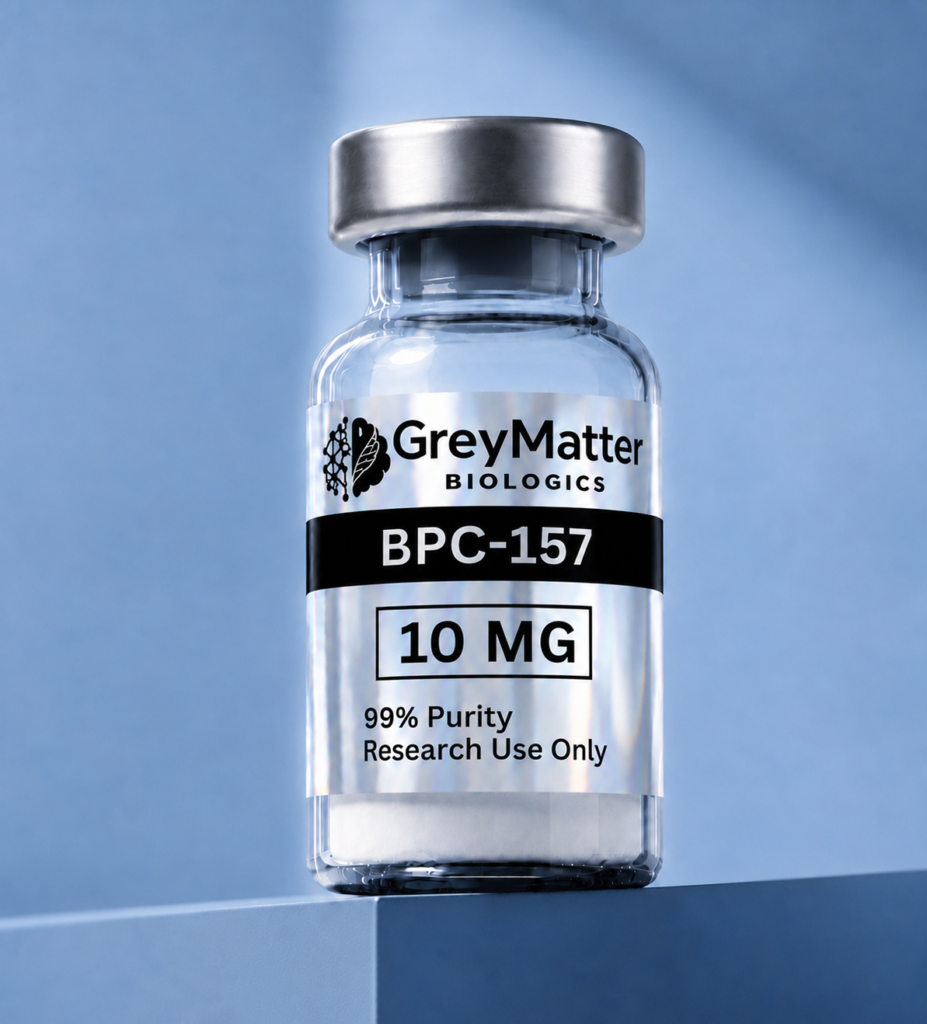
BPC-157
A short 43-amino acid synthetic fragment of thymosin beta-4 that regulates actin polymerization and promotes cell migration in preclinical research. Premium Research Peptide.
BPC-157, by the numbers.
Structural and laboratory facts that define this compound. For laboratory research use only.
Synthetic pentadecapeptide
g/mol · C62H98N16O22
Derived from a gastric protein sequence
Reverse-phase HPLC
The BPC-157 molecule
A schematic atomic representation shown next to the compound's molecular data. The figure is illustrative, not a measured conformation.
How it is studied.
Cytoprotective mechanisms studied in 200+ preclinical publications
BPC-157 upregulates vascular endothelial growth factor (VEGF) expression, promoting new blood vessel formation and enhancing blood supply to injured tissue in preclinical models.
- Promotes blood vessel formation (angiogenesis)
- Enhances VEGF receptor expression
- Modulates nitric oxide signaling (NO system)
Research demonstrates BPC-157 enhances growth hormone receptor expression in tendon fibroblasts by 7× within 3 days, supporting tissue repair signaling cascades.
- 7× growth hormone receptor upregulation
- Enhances tendon fibroblast viability
- Supports collagen synthesis signaling
BPC-157 demonstrates broad cytoprotective properties across multiple organ systems in animal studies, with particular relevance to gastrointestinal and musculoskeletal tissues.
- Gastric mucosal protection
- Accelerated wound closure in animal models
- Neuroprotective properties observed
Research pathway map
The primary pathways BPC-157 is investigated against in laboratory models.
Compound details.
Storage & handling
Supplied as a lyophilized powder. Store the sealed vial refrigerated at 2–8°C, protected from light and moisture; −20°C for long-term storage. Keep reconstituted material refrigerated.
J Mol Med · 2017Therapeutic potential of pro-angiogenic BPC157 is associated with VEGFR2 activation and up-regulation
Examines VEGFR2 signaling in endothelial and animal models.
Hsieh MJ et al., 2017 · PubMed ↗Molecules · 2014Pentadecapeptide BPC 157 enhances the growth hormone receptor expression in tendon fibroblasts
Growth hormone receptor expression in cultured tendon fibroblasts.
Chang CH et al., 2014 · PubMed ↗Curr Pharm Des · 2018BPC 157 and standard angiogenic growth factors. Gastrointestinal tract healing, lessons from tendon, ligament, muscle and bone healing
Review of preclinical BPC 157 literature.
Seiwerth S et al., 2018 · PubMed ↗