

⚠️ RESEARCH PURPOSES ONLY — This compound is not FDA authorized for human consumption. All referenced data is presented for informational and educational purposes only.
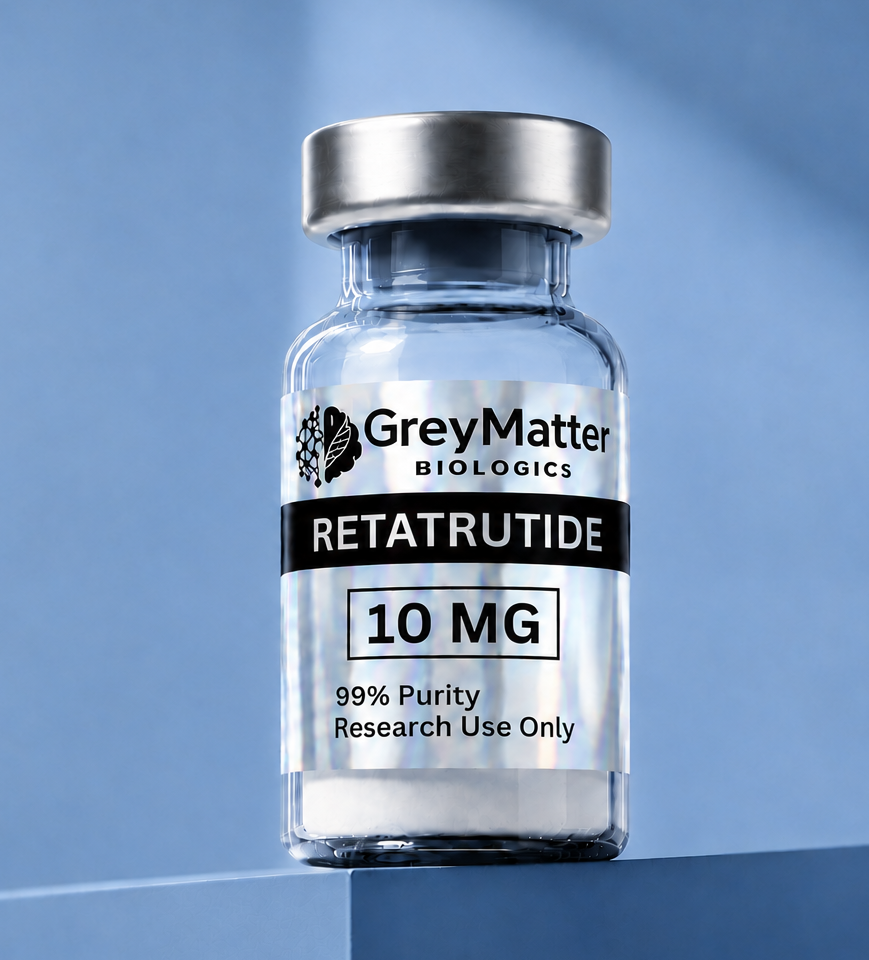
GLP-3 RT 10MG
$70.00
Availability: 5 in stock
How It Works
First-in-class triple hormone receptor agonist (LY3437943) targeting three distinct metabolic pathways simultaneously
GLP-1 Receptor Agonism
Activates GLP-1 receptors to enhance glucose-dependent insulin secretion, suppress glucagon release, delay gastric emptying, and engage central appetite regulation pathways in the hypothalamus. This is the same pathway targeted by semaglutide and liraglutide.
- Glucose-dependent insulin secretion
- Delayed gastric emptying
- Central appetite suppression
GIP Receptor Agonism
Co-agonism at GIP receptors potentiates the metabolic effects of GLP-1 signaling, enhances lipid metabolism, and modulates adipose tissue remodeling. This dual GLP-1/GIP mechanism is shared with tirzepatide, but GLP-3 RT adds a third target.
- Synergistic insulin potentiation
- Lipid metabolism enhancement
- Adipose tissue signaling
Glucagon Receptor Agonism
The unique third target — glucagon receptor activation increases hepatic energy expenditure, promotes fatty acid oxidation, and drives thermogenesis. This differentiates GLP-3 RT from all dual agonists and may account for its superior weight reduction in trials.
- Hepatic energy expenditure increase
- Enhanced fatty acid oxidation
- Thermogenic pathway activation
What Research Has Shown
Data from Jastreboff et al. 2023, NEJM — 338 adults, 48 weeks (PMID: 37366315)
Research Applications
Primary areas of investigation
Obesity & Weight Management
GLP-3 RT demonstrated up to 24.2% body weight reduction at 48 weeks in the Phase 2 obesity trial — the largest reduction reported for any anti-obesity compound in a randomized trial at that time.
Jastreboff et al. 2023 ↗Type 2 Diabetes
In subjects with T2DM, GLP-3 RT reduced HbA1c by up to 2.16% and fasting glucose by up to 69.1 mg/dL, with weight loss up to 16.94% — exceeding most dual-agonist results in comparable populations.
Panou et al. 2026 ↗Liver Fat Reduction (MASLD/MASH)
GLP-3 RT has shown marked reductions in liver fat content in preclinical and early clinical data, positioning it as a candidate for metabolic dysfunction-associated steatotic liver disease research.
Malandris et al. 2026 ↗Triple vs Dual Agonism
Network meta-analysis shows GLP-3 RT achieved the largest weight loss and HbA1c reduction among all glucagon receptor agonists studied, surpassing survodutide, mazdutide, and cotadutide.
Abulehia et al. 2026 ↗Compound Information
Technical specifications