

⚠️ RESEARCH PURPOSES ONLY — This compound is not FDA authorized for human consumption. All referenced data is presented for informational and educational purposes only.
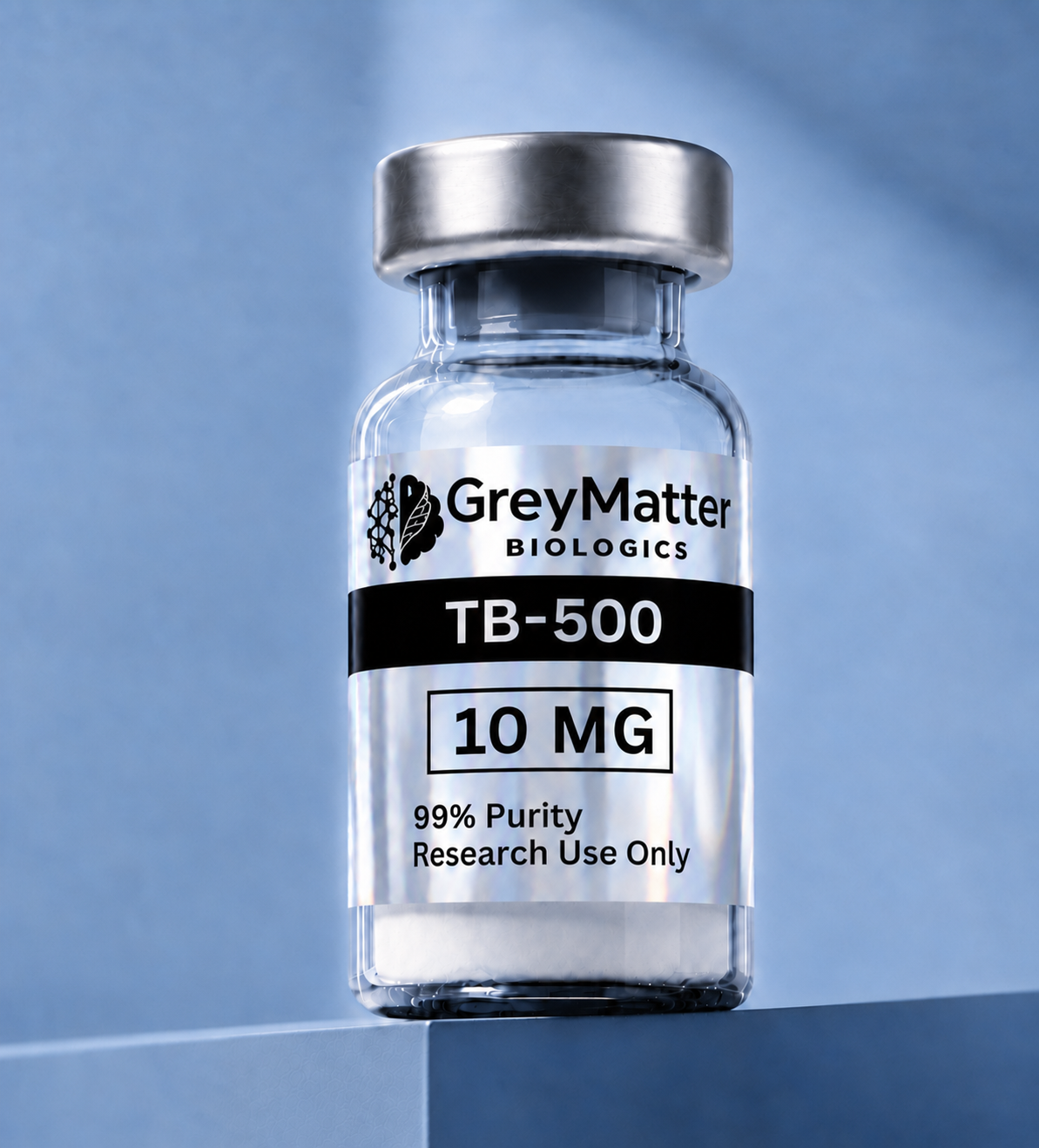
TB-500
$30.00 – $40.00Price range: $30.00 through $40.00
How It Works
Actin-binding peptide that promotes cell migration and tissue repair
Cell Migration & Motility
TB-500 binds G-actin monomers and promotes actin polymerization, enabling cells to migrate to injury sites. This is the primary mechanism driving its tissue repair properties in preclinical models.
- Sequesters G-actin to regulate polymerization
- Promotes cell migration to injury sites
- Enhances cytoskeletal remodeling
Cardiac Repair Signaling
In cardiac research, TB-500 activates integrin-linked kinase (ILK) and promotes cardiac progenitor cell migration. Phase II clinical trials have been conducted for cardiac repair applications.
- Activates integrin-linked kinase (ILK)
- Promotes cardiac progenitor cell migration
- Phase II clinical trial data available
Inflammation Modulation
TB-500 downregulates pro-inflammatory cytokines and modulates macrophage activity, shifting the immune response from inflammatory to regenerative in preclinical wound models.
- Reduces pro-inflammatory cytokines
- Modulates macrophage polarization
- Supports anti-fibrotic tissue remodeling
What Research Has Shown
Key preclinical and clinical findings
Research Applications
Primary areas of investigation
Wound Healing
Accelerates dermal wound closure, reduces scarring, and promotes organized collagen deposition in preclinical wound models.
Malinda et al. 2007 ↗Cardiac Repair
Promotes cardiac cell migration via ILK activation. Phase II clinical trials conducted for post-myocardial infarction repair.
Bock-Marquette et al. 2004 ↗Corneal Healing
Promotes corneal epithelial wound healing and reduces inflammation in ocular surface damage models.
Sosne et al. 2018 ↗Soft Tissue Repair
Enhances muscle, tendon, and ligament repair through actin-mediated cell migration and reduced fibrotic scarring.
Goldstein et al. 2010 ↗Compound Information
Technical specifications