

⚠️ RESEARCH PURPOSES ONLY — This compound is not FDA authorized for human consumption. All referenced data is presented for informational and educational purposes only.
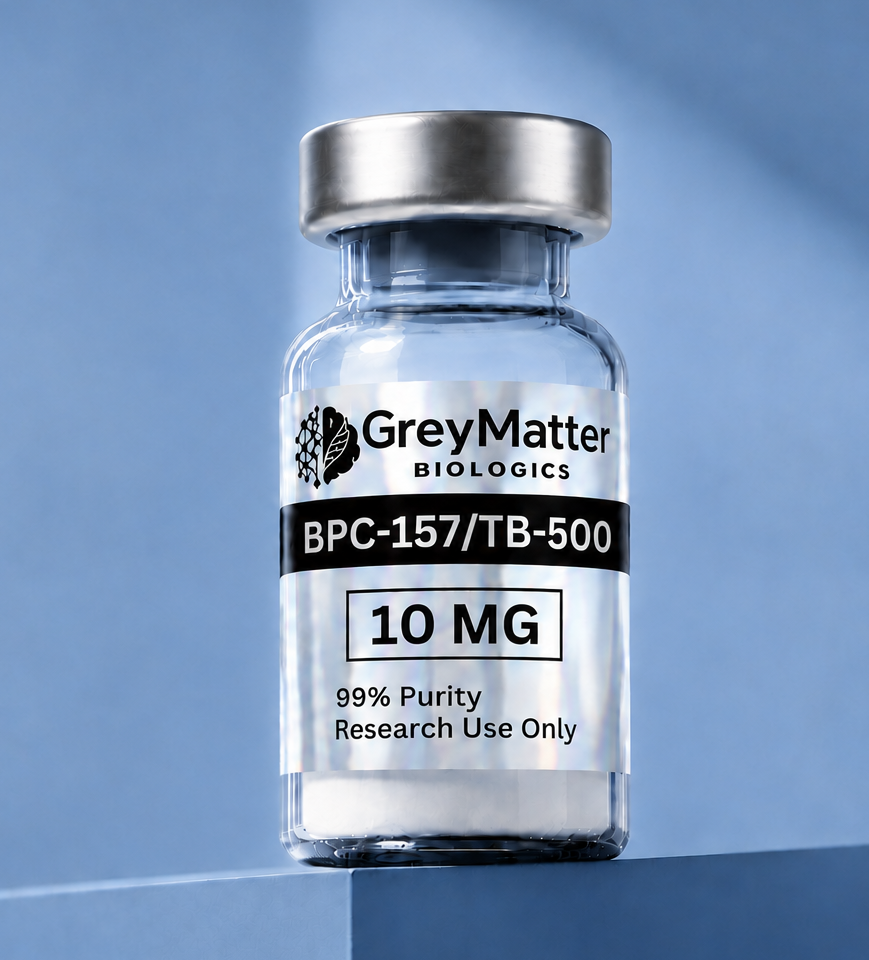
BPC-157/TB-500 (Wolverine)
$65.00 – $120.00Price range: $65.00 through $120.00
How It Works
Dual-peptide blend targeting complementary tissue repair pathways
Angiogenesis & Cytoprotection
BPC-157 upregulates VEGF expression and promotes new blood vessel formation, delivering nutrients and oxygen to damaged tissue. It also activates the NO system and demonstrates broad cytoprotective properties.
- VEGF-mediated angiogenesis
- Nitric oxide system modulation
- Gastric and tissue cytoprotection
Cell Migration & Actin Regulation
TB-500 sequesters G-actin monomers and promotes cytoskeletal remodeling, enabling repair cells to migrate to injury sites. It also activates integrin-linked kinase (ILK) for tissue repair signaling.
- Actin-mediated cell migration
- Integrin-linked kinase activation
- Anti-fibrotic remodeling
Complementary Repair Cascade
BPC-157 initiates vascular support (blood flow to injury), while TB-500 mobilizes repair cells to the site. Together they address two distinct phases of tissue repair — perfusion and cellular migration.
- Phase 1: Blood flow restoration (BPC-157)
- Phase 2: Cell mobilization (TB-500)
- Combined anti-inflammatory effects
What Research Has Shown
Key preclinical findings from individual component studies
Research Applications
Primary areas of investigation
Tendon & Ligament
BPC-157 accelerates tendon healing while TB-500 enhances cell migration to the injury site for coordinated soft tissue repair.
Chang et al. 2014 ↗Wound Healing
TB-500 promotes dermal healing and reduces scarring; BPC-157 provides vascular support for nutrient delivery to wound sites.
Malinda et al. 2007 ↗Vascular Repair
BPC-157 promotes angiogenesis via the NO system while TB-500 supports cardiac cell migration through ILK activation.
Sikiric et al. 2019 ↗Inflammation Control
Both peptides demonstrate anti-inflammatory properties through distinct mechanisms, creating a more controlled healing environment.
Sikiric et al. 2011 ↗Compound Information
Technical specifications